Italian Explorer Giovanni Verrazzano Discovered New York Bay and Manhattan Island


GIOVANNI VERRAZZANO

The DISCOVERER of MANHATTAN ISLAND

The HUDSON RIVER & NEW YORK BAY


GIOVANNI VERRAZZANO “The DISCOVERER of MANHATTAN ISLAND 

& NEW YORK BAY”

Verrazzano was born in Val di Greve (now Greve in Chianti), south of Florence, the capital and main city of the Republic of Florence. Recent archival research indicates he was born on July 20, 1491 to Frosino di Lodovico di Cece da Verrazzano and Lisabetta di Leonardo Daffi. An older hypothesis identified him with a son born in 1485 to Piero Andrea di Bernardo da Verrazzano and Fiammetta Cappelli.


GIOVANNI VERRAZZONO VOYAGE 1522- 1524

DISCOVERS NEW YORK BAY 

n September 1522, the surviving members of the Magellan expedition returned to Spain, having circumnavigated the globe. Competition in trade was becoming urgent, especially with Portugal. 

French merchants and financiers urged King Francis I of France to establish new trade routes. In 1523, the king asked Verrazzano to explore on France’s behalf an area between Florida and Newfoundland, intending to find a sea route to the Pacific Ocean. The expedition was funded by a consortium of Florentine merchants based in Lyon and Rouen, including the Gondi, Rucellai, Nasi, and Albizzi families. Over 20,000 écus were raised, with Verrazzano himself contributing as both captain and investor.

Within months, four ships set sail due west for the Grand Banks of Newfoundland, but a violent storm and rough seas caused the loss of two ships. The remaining two damaged ships, La Dauphine and La Normande, were forced to return to Brittany.

Repairs were completed in the final weeks of 1523, and the ships set sail again. This time, the ships headed south toward calmer waters under hostile Spanish and Portuguese control. 

After a stop in Madeira, complications forced La Normande back to home port, but Verrazzano’s ship La Dauphine departed on January 17, 1524, piloted by Antoine de Conflans, and headed once more for the North American continent.

It neared the area of Cape Fear on March 21, 1524 and, after a short stay, reached the Pamlico Sound lagoon of modern North Carolina. In a letter to Francis I, described by historians as the Cèllere Codex, Verrazzano wrote that he was convinced that the Sound was the beginning of the Pacific Ocean from which access could be gained to China. 

Continuing to explore the coast further northwards, Verrazzano and his crew came into contact with Native Americans living on the coast. However, he did not notice the entrances to the Chesapeake Bay or the mouth of the Delaware River.

In New York Bay, he encountered the Lenape in about 30 Lenape canoes and observed what he deemed to be a large lake, really the entrance to the Hudson River. He then sailed along Long Island and entered Narragansett Bay, where he received a delegation of Wampanoag and Narragansett people. 

The words “Norman villa” are found on the 1527 map by Visconte Maggiolo identifying the site. The historian Samuel Eliot Morison writes that “this occurs at Angouleme (New York) rather than Refugio (Newport). It was probably intended to compliment one of Verrazzano’s noble friends. There are several places called ‘Normanville’ in Normandy, France. The main one is located near Fécamp and another important one near Évreux, which would naturally be it. West of it, conjecturally on the Delaware or New Jersey coast, is a Longa Villa, which Verrazzano certainly named after François d’Orléans, duc de Longueville.”[27] He stayed there for two weeks and then moved northwards.

He discovered Cape Cod Bay, his claim being proved by a map of 1529 that clearly outlined Cape Cod. He named the cape after a general, calling it Pallavicino. He then followed the coast up to modern Maine, southeastern Nova Scotia, and Newfoundland, and he then returned to France by 8 July 1524. Verrazzano named the region that he explored Francesca in honour of the French king, but his brother’s map labelled it Nova Gallia (New France).


MAJOR POINTS


GIOVANNI VERRAZZANO was born in Greve in The Republic of Florence, modern day Grave in Chianti, Italy.

VOYAGE of 1524 – From 1522 – 1524, the Exploration of the East Coast of North America, from Florida to Newfoundland, Canada.

Landed at Cape Fear, Florida – March 21, 1524

1524 – Reaches the Chesapeake Bay near the mouth of the Delaware River

1524 – Sao;s into New York Bay and discovers Manhattan Island. Then explores Long Island, New York and discovers Narragansett Bay. 

1527 – Second trans Atlantic Voyage to Brazil. Returns to Dieppe, France with a cargo of Brazil Wood.

3rd VOYAGE 1528 – After exploring Florida, The Bahamas, and the Lesser Antilles, Verrazzano anchorage of the Island of Guadalupe, and rowed ashore, where he was allegedly Killed and “Eaten” by the native Caribs.


GIOVANNI VERRAZZANO EXPLORING The HUDSON

NATIVE LENAPE INDIAN SLOOK On


VERRAZZANO’S SHIP – La DAUPHINE

GIOVANNI VERRAZZANO
1524 VOYAGE
EXPLORATION of The EAST COAST of NORTH AMERICA
From CAPE FEAR FLORIDA to NEWFOUNDLAND, CANADA
With The DISCOVER of MANHATTAN ISLAND
And NARRAGANSETT BAY of LONG SILAND, NEW YORK
CASTELLOI VERRAZZANO
GREVE, ITALY in CHIANTI


CASTELLO VERRAZZANO Wine Estate – Greve

Castello di Verrazzano

, located in Greve in Chianti, is a historic Tuscan estate with roots dating to Roman times and documented winemaking since 1150. Famous as the birthplace of explorer Giovanni da Verrazzano (1485), the castle was held by his family until 1819. Owned by the Cappellini family since 1958, it is a renowned Chianti Classico producer focusing on Sangiovese and organic, sustainable farming.


  • The Verrazzano Family (7th Century–1819): The castle was home to the Verrazzano family. Giovanni da Verrazzano, who discovered New York Harbor in 1524, was born here. The family line ended in 1819.
  • The Ridolfi Era (19th-20th Century): The estate was passed to the Florentine Ridolfi family, known for founding the Fiorentina football team.
  • The Cappellini Era (1958–Present): Purchased by the Cappellini family in 1958, who restored the estate and revived its winemaking reputation.
  • Modern Era & Sustainability: The estate underwent full organic conversion in 2014. It also features a link to 1150 roots to the New York explorer, including exchanging stones between the castle and the Verrazzano-Narrows Bridge in 1963.

  • CHIANTI

    A bottle of CASTELLO VERRAZZANO CHIANTI 1969

    And a bottle of VILLA CALCINAIA CHIANTI 1969

    At The 100 YEAR ANNIVERSAY of The CHIANTI CONSORZIO

    GALA TASTING _ FOUR SEASONS – NEW YORK

    photo Daniel Bellino Zwicke


    Author / Italian Wine Guy – Daniel Bellino Zwicke

    With CAVALIERI LUIGI CAPPELLINO of CASTELLO VERRAZZANO

    In NEW YORK


    CASTELLO VERRAZZANO CHIANTI

    VERRAZZANO ROSSO – CHIANTI & CHIANTI RESERVE 
    .


    SUNDAY SAUCE

    by DANIEL BELLINO ZWICKE

    “AMERICA’S FAVORITE ITALIAN COOKBOOK”


    Going to ROME ? Travel Guide

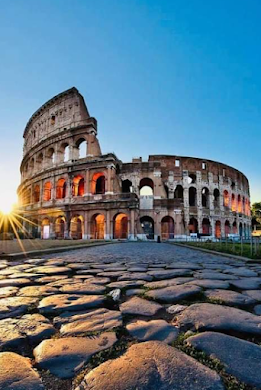
    The COLOSSEUM
     
    ROME , ITALY


    ROME :  FOOD & DRINK – TOURS – HOTELS – EVERYTHING
     
     
    Roma


    Rome, Italy — a city that has captured hearts and minds for years. Like most big cities, you can spend a pretty penny in Rome if you aren’t careful. Luckily though, there are also numerous free things to do in Rome just waiting to be explored.

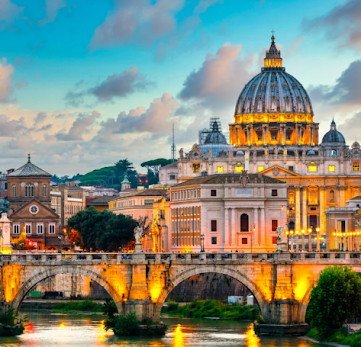
    The Eternal City is a fascinating contrast of history and modern society living together in harmony. It seems that everywhere you turn there is a historical site surrounded by the modern city that has grown up around it.


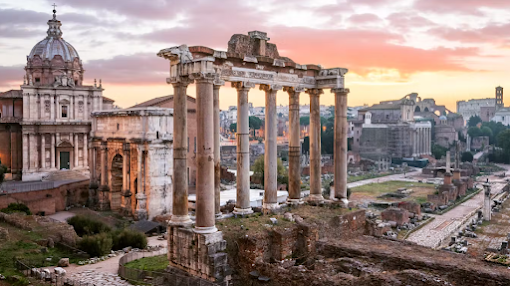
    The ROMAN FORUM

    Home to incredible churches, fabulous museums, beautiful piazzas, and unmatched historical sites, Rome is an ancient city with loads of things to do.

    .
    .
    The COLOSSEUM
    .
     

    Rome’s tenacity is best illustrated in its ancient monuments, remarkably intact nearly 2000 years on. Debuting in 80 AD, the behemoth 50,000 seat Colosseum famously hosted frenzied spectators who would watch gladiators facing off against each other or wild animals. No photograph can prepare you for the thrill of seeing it for the first time. More than any other monument, this iconic amphitheater symbolizes the power and drama of ancient Rome, and still today it’s an electrifying sight. The amphitheater dominates as the top tourist attraction in the city; Book Tickets in Advance to bypass the lines. 

    .


    .
    .
    .
    The PATHEON
     
    ROME
     
     
    Built by Romans in 126 A.D. in Rome, Italy, the Pantheon is the oldest, continuously used structure in history. The dome was and is a marvel of engineering and the design of the dome plus columns inspired domed landmarks worldwide.
    .
    .
     
     
    “EAT LIKE a ROMAN”
     
    5 MUST EAT DISHES
    .
     
     
    # 1  – BUCATINI  AMATRICIANA


    .
    # 2  – SPAGHETTI CARBONARA
    .
    .
    It is hard to separate fact from fiction when it comes to the origins of carbonara. The most popular rumour says that the dish came about during World War II when American GIs were craving bacon and eggs, and a clever chef found a way to mix them into pasta. Egg yolk is the key to a good carbonara because the dish is never made with the addition of cream in Italy. Some newer Rome restaurants riff on the dish, offering seafood or vegetarian versions, but there is nothing like the umami explosion of the classic egg, bacon and cheese.
    .
    .
    .
    # 3 –  CODA di VACCINARA
    Roman Oxtail Stew
    .
    .
    # 4  –  PASTA CACIO PEPE
    There are few dishes simpler or more satisfying than cacio e pepe–pasta with cheese and black pepper. The cheese in question is cacio–the word for Pecorino Romano in the local dialect. The finely grated pecorino is emulsified in starchy pasta cooking water to create a smooth sauce that is essentially pure cheesy goodness. Freshly ground black pepper helps to cut through the fattiness and adds a kick to the dish that Romans love. With so few ingredients, the key to cacio e pepe is a speedy chef who can ensure that the sauce comes out creamy instead of clumpy.
    .
    Where to EAT It : Flavio al Velavevodetto
    .
    .
    .
    # 5  – CARCIOFI GUIDEA
    ROMAN FRIED ARTICHOKS
    From The JEWISH GHETTO of ROME
    .
    .
    Perhaps it is true that anything will taste good fried, but there is a special place in Roman hearts for carciofi alla guidea. Looking like bronzed flowers, these deep-fried artichokes are a speciality in the city’s old Jewish quarter. The meaty globe artichokes attain their creamy-on-the-inside and crispy-on-the-outside perfection by being fried not once but twice. No need to separate the leaves or look out for thistles; these artichokes are eaten whole.
    .
    .
    .
    .
    # 6  – TRIPPA alla ROMANA
    Roman Stewed Tripe
    .
    .

    Offal is a cornerstone of Roman cuisine, dating back to when Europe’s largest slaughterhouse operated just outside the historic centre beside the Tiber river. Workers were partly paid in these poorer cuts, and a distinctive cuisine emerged. The most beloved of all is trippa or tripe–the honey-combed upper stomach of a grazing cow. In Rome, the tripe is slowly simmered in tomato sauce and topped with cheese, resulting in a pleasant flavour so long as you can get past the slightly off-putting texture.

    Where to get it: Checchino dal 1887


    # 7  –  ROMAN PIZZA


    Not to be confused with chewy Neapolitan-style pizza, Pizza alla Romana is cracker-thin and should always finish with a good crunch to the crust. The round pizza can be served with plain marinara sauce or piled high with toppings like olives, artichokes, egg and prosciutto alla capricciosa. The budget-friendly meal is most popular with young Romans, who hardly let a week go by without a night out with friends over pizza.

    .

    .

    .

    ROMAN PASTA RECIPES
    .
    .
    MANGIA ITALIANO
    CARBONARA – AMATRICIANA
    CACIOE e PEPE
    And MORE
    .
    .
    .

    “ROME to The AMALFI COAST”.

    .
    .
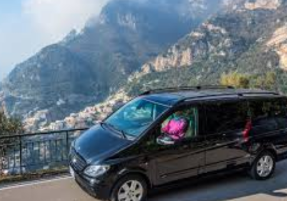
    ROME to POSITANO The AMALFI COAST
     
     
    PRIVATE & SEMI-PRIVATE
     
    DOOR to DOOR
    .
    .
    .
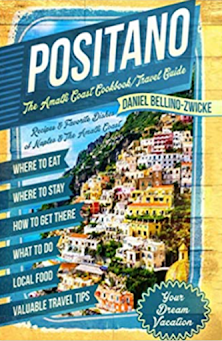
    Going to POSITANO ?
     
    The AMALFI COAST ?
     
    “YOU NEED THIS TRAVEL GUIDE”
     
    POSITANO The AMALFI COAST
    .
    FLY With EXPEDIA - HOTESL & FLIGHTS
    FLIGHTS & HOTELS
    WORLDWIDE
    .
    .

    “OMIO” TRAINS PLANES BUSES & FERRIES
     
    TICKETS in EUROPE USA WORLDWIDE
     
     
    CHEAP FLIGHTS – TRAINS – BUSES