Tag: TRAVEL
Casanova ‘s Favorite Cafes and Wine Bars in Venice Hotels
VENICE
Since 1720
.
Giacomo Casanova
(1724 – 1798)
.
Giacomo Casanova was born in Venice on 2 April 1725, the eldest son of a Spaniard Gaetan-Joseph-Jacques Casanova and his Italian wife Zanetti Farusi, both actors. His father died when he was around nine or ten and his mother continued traveling with her acting troupe, leaving her six young children as always with their maternal grandmother Marzia Farusi; Casanova and his siblings don’t seem to have had much of a relationship with their mother then or later in life. Casanova describes himself as having being ‘a vegetable’ until the age of eight, by which we should infer nothing much interesting or eventful happened in his early growing years. However he did begin his education and showed himself to be an unusually bright young fellow. Not bright enough to have developed a complete understanding of himself as yet though. His first choice of a career, funnily enough, was Priesthood – even in an era when nobody was particularly chaste or saintly, he would have been a real disaster in that role. Fortunately for him, his roving eye ruined this prospect before it even began and, never the one to be cast down by anything for very long, he shrugged, studied Law instead, and let himself loose on the secular world next.
For the rest of his life, Casanova was to remain, what can only be described as, a Jack of all Trades – and Master enough of himself to get out of all the sticky situations that these Trades invariably got him into. He developed into a real tolerant, open-minded individual – he usually refrained from pointing fingers at other people’s morals and never hesitated in giving them plenty of reasons to be sniping about his in turn – if they sniped too much and too loud, he was always forward in inviting them to duel – and he was rarely the one to be carried off the field with many wounds to lick. He made time for practically all the fools he came across – to fleece them for all they were worth – and for most of the women and girls that crossed his path. He nearly married on several occasions, but last minute escapes prevailed every time. On one occasion he almost married his own illegitimate daughter – he had several illegitimate children that he either never heard of or came to hear of, like on this occasion, a mite later in life. Certainly though, he never worried his head too much about them. But then he wasn’t prone to worrying too much about anything. This perhaps was the main ingredient of his carefree existence. If one thing doesn’t work, well, never mind, let’s move on to something else, let’s see what’s around the next bend. And if it was necessary to bend a bit to get around the bend, hey, no problemo whatsoevero, in this life of ours some adjustment is always necessary.
Casanova’s talent for adjustment saw him traveling widely – Florence, Italy, Spain, Russia, Poland, Germany, England, France, Switzerland, Holland, Belgium, Austria, Turkey – and coming into contact with a wide spectrum of society, from peasant-folk to city thugs to ordinary middle-class people to the very rich and affluent to the aristocrats and royalty. He had close social contacts with the King of France, with Catherine The Great of Russia, with George III of England, with Frederick The Great of Prussia, with Joseph II of Austria, with Benedict XII in Rome, with the French thinkers Voltaire, Rousseau, d’Alembert, Crebillon, and many other eminent personalities of the day. He also found himself a prisoner of the Inquisition in Venice’s notorious Piombi prison for 15 months – for expressing his personal opinions on religion and morality a little too publicly – he would probably have languished there forever except for his irrepressible spirit – after one failed bid to escape, he tried again and his hair-raising second attempt was a success. Unlike one of our modern heroes, Casanova doesn’t appear to have suffered from much post traumatic stress as a result of this ordeal. He dusted himself off and coolly went back to the business of living. He always took care to live particularly well, with good food, clothes, and lodging. He made a great deal of money from his various schemes and lost it all rather quickly. The concept of saving was just beyond him.
Some twenty years later, needing money, he was back in Venice, opportunistically seeking employment with the very people that had once arrested him. It seems they were as prepared to be forgiving and he worked for them as a Secret Agent from 1774 to 1782. Then he left Venice for the last time and went to Paris. Here he met Count Waldstein who invited him to come live on his property, the Chateau Dux, in Bohemia and work there as a Librarian. Quite a career change, but perhaps a little peace and quiet was just what Casanova was looking for. He accepted and spent the next fourteen years at Dux.
It wasn’t demanding work and gave him ample time for intellectual pursuits of his own – aside from his memoirs, on which he worked diligently, he wrote on Mathematics, Philosophy, Grammar, Poetry, Short Stories, Plays, and so on. He also maintained a voluminous correspondence with friends, acquaintances, and former lovers. Age didn’t in any way diminish his general enthusiasm. Just prior to his death – on 4 June 1798 – he was described by the Prince de Ligny as: “At 73, no longer a god in the garden or a satyr in the forest, he is a wolf at table.”
The GRITTI PALACE HOTEL
VENICE HOTELS & WORLDWIDE
.
.
STORIES of ITALIAN FOOD
In ITALY
The Feast of The Seven Fish Italian Christmas Cookbook – Daniel Bellino Christmas Fish Recipes
The FEAST of The 7 FISH. “ITALIAN CHRISTMAS”
The Feast of The 7 Fish, a popular cookbook celebrating the Italian-American Christmas Eve tradition. The book features recipes, stories, and instructions for preparing the multi-course seafood meal, often called La Vigilia.
- He has worked as a chef, wine director, and managing partner at various restaurants, including
Bar Cichetti
, which he founded
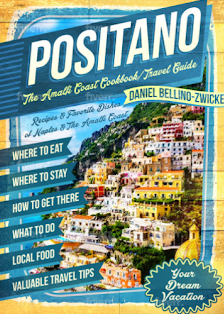
. - Bellino-Zwicke has authored several best-selling Italian cookbooks, including Sunday Sauce, Ragu Bolognese Cookbook, and Positano The Amalfi Coast Cookbook.
- He often writes about Italian-American cuisine and culture, incorporating personal stories and travel experiences.
- About the book, The Feast of The 7 Fish:
- It provides historical context for the Southern Italian and Italian-American Christmas Eve feast.
- The recipes include traditional dishes such as Baked Clams Oreganta, Seafood Salad, Linguine with Clam Sauce, and Mussels Marinara.
- The book aims to preserve and share the family tradition, which has often been passed down orally through generations.
- The tradition of the Feast of the Seven Fishes:
- Origin: It is an Italian-American tradition that evolved from the Catholic practice of abstaining from meat on the eve of holy days. While fish-centric meals are common in Southern Italy, the specific “seven fishes” tradition is largely an American development.
- Symbolism: The number seven can symbolize various things, including the seven sacraments of the Catholic Church, the seven hills of Rome, or the seven days of creation.
- The meal: It is a multi-course dinner featuring a variety of seafood, which can include baccalà (salt cod), calamari, clams, mussels, and eel. The specific dishes often vary by region and family tradition.
Best Selling Italian Travel Guide – Italian Food & Travel is the Number 1 Best Seller Italy Travel Guides Amazon by Daniel Bellino Zwicke
” by Daniel Bellino Zwicke is
a combined cookbook and travel guide that focuses on specific Italian regions and cities, including Naples, Rome, Venice, and the Amalfi Coast. It integrates personal travel anecdotes, practical advice for travelers, and authentic recipes.- Recipes: It features recipes for popular dishes from these regions, such as Insalata di Polpo, Arancini, Eggplant Parmigiano, Polpette (meatballs), and Spaghetti Vongole.
- Personal Stories: The narrative is enriched with the author’s personal experiences, recommendations for local spots (like bacari in Venice), and insights into the local food culture.
- Practical Information: It provides travel tips and information, helping readers navigate specific locations and find authentic experiences.
- Where to Find It
- The book is available in both paperback and Kindle formats. You can purchase it or view snippets on the following platforms:
- Daniel Bellino Zwicke’s Author Website
- Other related works by the author include Mangia Italiano, Segreto Italiano, and POSITANO The AMALFI COAST COOKBOOK & Travel Guide
Vino Vongole Pizza Pasta & Lemonade – Capri Positano The Amalfi Coast
Me at My Favorite Restorante in Positano
New Italian Travel Guide – Cookbook with Special Section Bourdain in Italy
BOURDAIN in ITALY
ITALIAN FOOD & TRAVEL Has ARRIVED !!!
Italian Food & Travel – Rome Venice Pizza Pasta & ?. The book is available for purchase on Amazon.com.
- Positano The Amalfi Coast Travel Guide – Cookbook
- The Feast of The 7 Fish “ITALIAN CHRISTMAS”
- La Tavola
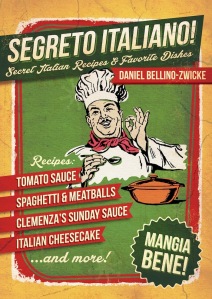
- Segreto Italiano
- He also runs a successful Italian-themed Instagram page, @NewYork.Italian, which focuses on Italian food, wine, travel, and culture.
Pizzeria Gorzia Pizza – Naples Italy
THE GORIZIA PIZZERIA dal 1916
A welcoming atmosphere, a team of true Neapolitans and all the warmth that distinguishes our city: Pizzeria Gorizia 1916, a reference point in the Neapolitan gastronomic scene, has been making pizzas for over a century.
Today as a hundred years ago: both our pizzas and our dishes come from ancient traditional recipes, handed down from generation to generation, and prefer carefully selected local products of excellence.
Don’t miss the 1916 pizza: ricotta, mozzarella, courgette flowers, artichokes, salami and provolone del monaco, a tribute to the iconic ingredients of our restaurant.
OUR HISTORY
It is May 10, 1916 when, in a Vomero which is still an expanse of land planted with broccoli, a very young Salvatore Grasso opens for the first time the doors of a business that, over the years, will become an institution in the pizza scene. Neapolitan.
As soon as he returned from the front, Salvatore, who before leaving was already an acclaimed pizza maker at the Mattozzi pizzeria, decided to set up his own business with his wife Anna in a neighborhood that would soon experience a huge expansion, the Vomero. He then took over an old restaurant, called it “Gorizia” in honor of his fellow soldiers who in those days entered the city of Gorizia, and for 9 years it remained the only restaurant business in the area. Salvatore’s cuisine and his pizza delight from the humblest palates to the noblest: princes and dukes, in love with the climate and tranquility of the hill, begin to build their own residences in Vomero and become a permanent presence at Pizzeria Gorizia. Similarly, the workers who flock to the neighborhood and have a short lunch break,
The years pass and the gastronomic offer of Neapolitan delights that goes alongside pizza, thanks also to the intervention of the Duke Pironti, owner of the property who provides Salvatore with a series of tips and also an expert cook, becomes increasingly sought after.
Di Salvatore in Salvatore, the Gorizia pizzeria has reached its 105th birthday today, and has seen illustrious characters succeed each other at its tables, from Totò to De Filippo, up to Luciano De Crescenzo who, as a very young man, had obtained his own right here first job as a waiter.
Today the Pizzeria Gorizia 1916 is proud to offer a pizza prepared according to the most ancient tradition and seasoned with products of unparalleled quality that Salvatore sr (current president of UPSN “Le Centenarie”) and Salvatore jr enjoy discovering among the small artisan excellences that the Italian territory has to offer. A lot of passion, constant updating and a continuous search for the best ingredients, have also made the traditional gastronomic offer that goes alongside the ever richer and tastier pizza, to the point of giving the Pizzeria Gorizia 1916 the honor of becoming Krug Ambassade.
A warm welcome, an excellent pizza and a nice glass of champagne: crossing the threshold of the Pizzeria Gorizia 1916 means treating yourself to an unforgettable experience.
Casanova Favorite Cafes and Wine Bars in Venice that You Can Still Go To – Open
VENICE
Since 1720
.
Giacomo Casanova
(1724 – 1798)
.
Giacomo Casanova was born in Venice on 2 April 1725, the eldest son of a Spaniard Gaetan-Joseph-Jacques Casanova and his Italian wife Zanetti Farusi, both actors. His father died when he was around nine or ten and his mother continued traveling with her acting troupe, leaving her six young children as always with their maternal grandmother Marzia Farusi; Casanova and his siblings don’t seem to have had much of a relationship with their mother then or later in life. Casanova describes himself as having being ‘a vegetable’ until the age of eight, by which we should infer nothing much interesting or eventful happened in his early growing years. However he did begin his education and showed himself to be an unusually bright young fellow. Not bright enough to have developed a complete understanding of himself as yet though. His first choice of a career, funnily enough, was Priesthood – even in an era when nobody was particularly chaste or saintly, he would have been a real disaster in that role. Fortunately for him, his roving eye ruined this prospect before it even began and, never the one to be cast down by anything for very long, he shrugged, studied Law instead, and let himself loose on the secular world next.
For the rest of his life, Casanova was to remain, what can only be described as, a Jack of all Trades – and Master enough of himself to get out of all the sticky situations that these Trades invariably got him into. He developed into a real tolerant, open-minded individual – he usually refrained from pointing fingers at other people’s morals and never hesitated in giving them plenty of reasons to be sniping about his in turn – if they sniped too much and too loud, he was always forward in inviting them to duel – and he was rarely the one to be carried off the field with many wounds to lick. He made time for practically all the fools he came across – to fleece them for all they were worth – and for most of the women and girls that crossed his path. He nearly married on several occasions, but last minute escapes prevailed every time. On one occasion he almost married his own illegitimate daughter – he had several illegitimate children that he either never heard of or came to hear of, like on this occasion, a mite later in life. Certainly though, he never worried his head too much about them. But then he wasn’t prone to worrying too much about anything. This perhaps was the main ingredient of his carefree existence. If one thing doesn’t work, well, never mind, let’s move on to something else, let’s see what’s around the next bend. And if it was necessary to bend a bit to get around the bend, hey, no problemo whatsoevero, in this life of ours some adjustment is always necessary.
Casanova’s talent for adjustment saw him traveling widely – Florence, Italy, Spain, Russia, Poland, Germany, England, France, Switzerland, Holland, Belgium, Austria, Turkey – and coming into contact with a wide spectrum of society, from peasant-folk to city thugs to ordinary middle-class people to the very rich and affluent to the aristocrats and royalty. He had close social contacts with the King of France, with Catherine The Great of Russia, with George III of England, with Frederick The Great of Prussia, with Joseph II of Austria, with Benedict XII in Rome, with the French thinkers Voltaire, Rousseau, d’Alembert, Crebillon, and many other eminent personalities of the day. He also found himself a prisoner of the Inquisition in Venice’s notorious Piombi prison for 15 months – for expressing his personal opinions on religion and morality a little too publicly – he would probably have languished there forever except for his irrepressible spirit – after one failed bid to escape, he tried again and his hair-raising second attempt was a success. Unlike one of our modern heroes, Casanova doesn’t appear to have suffered from much post traumatic stress as a result of this ordeal. He dusted himself off and coolly went back to the business of living. He always took care to live particularly well, with good food, clothes, and lodging. He made a great deal of money from his various schemes and lost it all rather quickly. The concept of saving was just beyond him.
Some twenty years later, needing money, he was back in Venice, opportunistically seeking employment with the very people that had once arrested him. It seems they were as prepared to be forgiving and he worked for them as a Secret Agent from 1774 to 1782. Then he left Venice for the last time and went to Paris. Here he met Count Waldstein who invited him to come live on his property, the Chateau Dux, in Bohemia and work there as a Librarian. Quite a career change, but perhaps a little peace and quiet was just what Casanova was looking for. He accepted and spent the next fourteen years at Dux.
It wasn’t demanding work and gave him ample time for intellectual pursuits of his own – aside from his memoirs, on which he worked diligently, he wrote on Mathematics, Philosophy, Grammar, Poetry, Short Stories, Plays, and so on. He also maintained a voluminous correspondence with friends, acquaintances, and former lovers. Age didn’t in any way diminish his general enthusiasm. Just prior to his death – on 4 June 1798 – he was described by the Prince de Ligny as: “At 73, no longer a god in the garden or a satyr in the forest, he is a wolf at table.”
The GRITTI PALACE HOTEL
HOTELS in VENICE & WORLDWIDE
.
.
STORIES of ITALIAN FOOD
In ITALY
Remembering BAR DeMARTINO – Positano
.
We knew this a little while ago with a message we did not even believe. E ‘died Ciro De Martino, the owner of the homonymous bar in Via Pasitea (where is now the Cafè Positano) that was considered the “good retreat” of artists, writers, intellectuals. The “world” of culture and the real “aficionados” of the pearl of the Amalfi coast “recognized” in this place where time flowed with the slow rhythms typical of that atmosphere of timeless Mediterranean places. Here you happened to meet the great showman, like the poet Gregory Corso (pictured) or artists like Ibrahim Kodra and beyond. You could stretch out from the nightlife of the big beach, then very busy for the by night, climb to “La Scalinatella” and drinking a gin and tonic the time passed chatting until dawn, between adventures and winking, reflections or discussions, a guitar playing and two laughs, when Ciro churned out the hot croissants and, without ever complaining about a presence beyond the maximum term of common tolerance, you could taste them at sunrise. . I remember when he told me about the Beatles, who still owed him something for drinking a latch, or the many artists and painters Hundertwasser, Corsa, Lieto, Rudi and Vali …… Peter Thomson .. He, like the many operators of the past, with a big heart and hands incalled by the hard and honest work of a life, he always welcomed everyone with kindness and humanity. From his bar passed and met the world .. so many stories, unfortunately, we can not hear them anymore … Now Ciro, who ended his days in his little house in Praiano down the stairs of Gavitella, in the “heart” of the coast of Amalfi, it’s not anymore.
Michele Cinque
THE DEMARTIN BAR
WAS THE TERRESTRIAL PARADISE OF GIRITIELLO
OF HIS SOLITUDE SECRET
FACEVA THE PASTRY
AND IT WAS THE MOST SWEETING PERSON OF HER DESSERTS … ..
AND WITH HANDS STRINGED IF A BEAUTIFUL WOMAN ….
Angela Mammato
The Isle of Capri – Lemons Lemonade and La Dolce Vita
Lucky me, I’m going to Capri. Capri, like Positano, has many charms. Its main attribute being its unmatched beauty, which is exceedingly spectacular. The island springs up out of the sea and soars to very high heights, making for the island’s breathtaking beauty. Capri has long been a playground of the rich, the Jet Set, so-called beautiful people, and those wealthy enough to anchor their yachts off the waters off this gorgeous Paradise. But although Capri is the playground of the rich, most anyone can go, and will be warmly welcomed. Go to Capri and have the time of your life. Yes I love Capri, as it was Love at first sight way back in 1986.
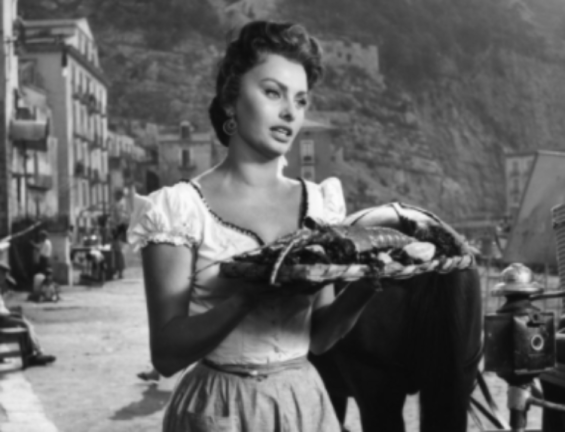
I had seen the island in movies, saw many pictures, read about it, and saw it on The Lifestyles of The Rich & Famous with Robin Leach. I have always had the Wanderlust, ever since I was a young boy and saw William Holden in The World of Suzy Wong, Katherine Hephurn in Summertime (in Venice), and Sophia Loren and Clark Gable in “It Started in Naples” which was set on Capri. I’d go to the Rivoli Theater, watching James Bond, Agent 007 in Hong Kong, Rome, London, Venice, all over the World. I wanted to do the same. I yearned to go to Rome, Paris, The Orient, everywhere, so in the Summer of 86 I would chalk Capri off of my Bucket List. I did; Rome, Florence, Barcelona, Positano, Naples, and Venice the year before. I went nuts for Rome and Positano, and was going back again, though this time, I did 4 days on Capri in between. Back then there was no internet and no Booking.com to find hotels. You had to get info in Travel Guide Books, of which the Frommer’s Guides were always my favorite. They’d have a list of budget, mid-price, and luxury hotels, and the pickings of info was rather slim, compared to the vast array of info you get these days. The list of budget hotels in my 1985 Frommer’s Guide to Italy was rather meager, and if I believe correctly, there were only two budget hotels listed for Capri, one being the Villa Tosca, which was $38 a night, so I figured I’d stay there.
So, also in the Frommer Guide, I got my info on how to get to Capri. After spending a few days in Rome, I took a train from Rome to Naples Central Station. I then jumped in a taxi that took me to Porto Molo Beverello where I bought my ferry ticket and waited for the next boat to Capri. Back then, they had beautiful old ferry boats which were much nicer than the ugly modern ones they have these days. I wish they still had those nice old boats, but they don’t, so C’est la Vie. Anyway, I waited for the ferry, walked on the gang-plank, gave the guy my ticket, and found a seat on board. It was a lovely one-hour ride to Capri, and the weather was just perfect, and the boat didn’t make any noise like these new ones do today. I sat outside and enjoyed the ride, as the sea breeze blew in my hair, “I was on my way to Capri. How Lucky am I,” I thought? And I was, very much so. Yes, it was all quite a delight. As we got closer to Capri, I became very excited at the thought of it all. In a few minutes I’d be on the beautiful Isle of Capri. A place I’d only dreamed of, and yearned for, before, and now I was there, I made it happen. I could see it in the distance. The boat got closer and closer, and Capri was looking larger and larger, as it seemed to just burst out of the azure blue waters of the Tyrrhenian Sea. “What a sight? Capri. It was absolutely gorgeous, and I was going there. Again, “Lucky me.”
The boat pulled into Marina Grande. Me marveling at it all. When I got off the boat, I made my way over to a caffe to make a telephone call to Villa Tosca to see if they had a room available for me. That’s how you did it back then (booking a hotel). They did have a room. Again, lucky me.”
I walked over to the Funicular that takes you from down by Marina Grande, up to the main part of Capri known as Capritown. When the Funicular arrived at the top, I hopped off, and immediately spotted the cute little Lemonade Stand across the way. I walked over and ordered one. A Lemonade. So refreshing, made with Capri Lemons, “wow, what a treat?” This was the first of many Capri Lemonades over the years, at this stand, at the end of the Via Tragara, and the one on the Via Certosa near my hotel.
I drank my lemonade, then made my way down the street to get to the Villa Tosca Pensione. I got my first glimpse of the Piazza Umberto where I would have many wonderful times later on in the trip. After about 200 feet you come up to The Grande Hotel Palma, another place where I’d have quite good times as well. About 300 feet past The Palma, I caught my first glimpse of the Grande Quisisana Hotel, where the man on the phone from the hotel, told me to go down the alleyway next to the Quisisana, walk down to the end, make a right, walk a few feet and make the first right and there I’d see the signs to Villa Tosca, just follow them and you are there.
The hotel Tosca was lovely. Well it was pensione at the time. Nothing that special other than the fact that it was very affordable, I had a roof over my head, it was clean, and it is located in one of the most gorgeous spots on Capri. It was amazing, and it still is, though now it’s a little boutique hotel, called not Villa Tosca anymore, but La Tosca. It’s still owned by the same family. The son took it over from his parents, and turned it from a modest pensione into a cool little boutique hotel. Anyway, there is a nice terrazzo where I tell you, the place has one of the most beautiful views in all of Capri. As I sat there on the terrazzo back in 1986, the Carthusian Monastery is just about 500 feet away, you can also see off to the Via Tragara and spot the lush Villas that line it along the way, but most of all are the majestic Faraglioni Rocks that shoot up out of the sea, and are the islands main attraction, along of course with the Famed Blue Grotto nearby. Yes the view from the terrazzo of the Villa Tosca is gorgeous, and I couldn’t take my eyes off of the Faraglioni, they were pulling me to them. Seriously, I had no idea. I looked at them, shooting out of the sea, and they pulled me. I just had to go over there. And so I put on my swim trunks, and I asked Giuseppe how to get there. He gave me directions, and I was on my way.
I had to go back towards the Quisisana, and turn right onto the Via Tragara, and take it all the way to the end before taking the walking path that leads you down to the two beach clubs by the Faraglioni Rocks, Da Luigi and Fontelina Beach Club. I have to tell you, right before you go down the pathway to the beaches, there is another Lemonade Stand there at the very end of the Via Tragara. “You just know, I had to get another Lemonade.” And so I did, and along with the beauty of Capri, the swimming that I love so much, the piazza, the trattorias, and caffe’s, the lemonade stands of Capri are something I’ve always adored. Everytime I’m on Capri, you know I get my fair share of Capri’s tasty Lemonade. It tastes so good. “It’s the best in the World.”
On my trip to Capri, in the Summer of 2015, I made my way back to the Faraglioni Rocks, to swim once again at Da Luigi Beach Club. I hadn’t been to Capri in a few years, so as always, whether swimming at Marina Piccola, La Fontelina, or at Da Luigi, that day in 2015, I had the most wonderful day. I had picked up my tasty beach lunch of an Arancini, Eggplant Parmigiano, and a small bottle of Aglianico at the Salumeria Capri. I got lunch and it was down to the Via Tragara and off to Da Luigi. I couldn’t wait.
As usual, I spent the day lying around on my chaise lounge, looking out to the Faraglioni, the yachts, Goza Boats bobbing off the shore. It was a gorgeous sunny day in Capri. “I Love it.” And though I’m not normally a beach person, when I’m in Positano, on the Amalfi Coast, or on my beloved Isla of Capri, I just adore swimming there. I hang out doing nothing, that’s what you do on Capri. Well, you swim, lounge around, eat lunch, and have a cocktail or two when it’s Aperitivo Time. This is what you do on the beautiful Isle of Capri, pretend you are Sophia Loren, Or our old pal Marcello. One can “Dream, can’t one?”
On that first trip to Capri, I was so lucky to wander into the Palma Hotel one night. There was a girl singing at the piano bar, and it was quite a lovely little scene. The crowd was cool, and a good crowd more than anything else is what makes a place, whether you’re in a bar, a cafe, club, or cocktail bar, it’s all about the people, “are they cool.” And the fact that you are in a lovely hotel, and you are on Capri, you just can not help having “the time of your life.”
As I sat at the bar, I couldn’t believe my eyes when I spotted Tony. Tony used to own a little clothing boutique on Broadway in the East Village of New York. I had bought some pants, and a couple shirts a few weeks earlier. And there he was, Tony from New York was at the bar on Capri. “I love it.” And so we had our cocktails and chatted, and then I met a girl Alessandra, who was from Napoli. She lived in New York, and had a little house in Capri as well. I chatted with Alessandra, and so we became friends, and I had fun hanging out with her for the rest of my time in Capri.
Boy I tell you it’s crazy, I met Maria and her daughter when I was swimming at Marina Piccola one day. Actually, her daughter started talking to me and was so excited to meet other people from New York. Maria was from Naples originally and moved to New York and she and her husband owned Benitto II Restaurant in Little Italy, New York. Actually, I was hanging out on the beach at Marina Piccola, and this girl started talking to me, and when she found out I was from New York she got quite excited, and told me, “please, you have to come and meet my mother and my nonna.” And so I did, and that’s when I met Maria who owned a Benito II restaurant in New York City. So when I got back to New York, I went down to Benito and met Maria’s husband Sal. For a number of years I’d go down and eat at Benito a few times a year, but eventually I stopped going and I sort of lost touch with Maria and Sal, and their daughter Maria. And it’s such a funny thing, that a couple days later when I was leaving Capri and going to Positano, when I was sitting in a caffe for a few minutes before I was getting on the Funicular, I met another woman and her daughter at the cafe, and I couldn’t believe it, the lady (forgot her name from 30 years ago) owned a restaurant in New York as well. She and her husband owned Martel’s on 3rd Avenue. I couldn’t believe it. What are the chances of meeting two different women on the island of Capri, and they both own restaurants in New York? Quite high I’d say.
So, as usual when I’m on Capri, Positano, Ischia, or anywhere on the Amalfi Coast, what do you do? Well it depends. Mainly, you will eat at different restaurants and trattorias, and just enjoy all the wonderful food of the islands and the Amalfi Coast, and you drink the local wine, chit chat with your friends, go to the beach, swim, sun bath, and soak up the lovely Mediterranean Sun. You “Live the Good Life” if for only a week or two a year. Now you might do a little sightseeing, or you might not, you don’t need to. Some people just want to go to the beach, go for lunch, go to another nice place for dinner, have some espresso, gelato, and aperitivo in-between, then go back to the hotel to sleep, and do it all over again the next day. You do whatever you want, it’s your vacation. And that’s what I always do. The first 3 times to Capri, Positano, and the Amalfi Coast, that’s what I did, I didn’t do much sightseeing, but all the subsequent times I did, here and there, seeing Pompeii, exploring Napoli, going to Ravello, Cetara, some vineyards, and Vesuvio, but mainly when I’m on Capri, I just swim, eat, relax and live the good life, “La Dolce Vita”
Basta !
Daniel Bellino Zwicke
Excerpted from my forthcoming book –
.